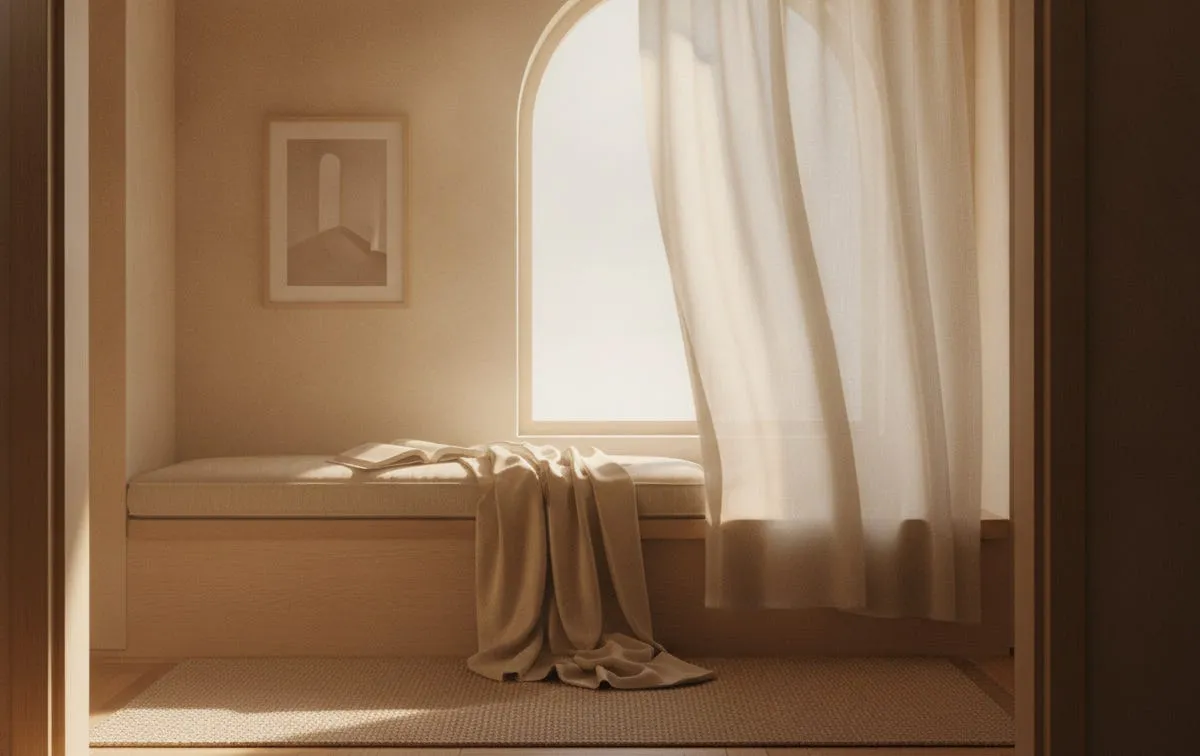
There is a difference between a corner that looks like a reading nook and a corner that actually lets you slow down. The first is styled. The second is sequenced for the body. This is how to build the second kind.
The corner comes before the habit
Most reading nooks fail before anyone sits down because they are built for a photograph first and a body second. A pillow stack, a perfect throw, a shelf arranged by color — these can be beautiful, but they do not necessarily tell a nervous system that it is safe to slow down.
A reading nook that actually works is built around one believable cue: this spot does not expect productivity from you. It is not a place to look productive while resting. It is a place where the rest is the whole point.
https://www.pinterest.com/pin/1077627017124276922/
What belongs in a slow-down corner
Start with one comfortable surface and one light source you can control. Add one tactile object — a mug, a blanket, a book — and let the rest be empty. The emptiness is not unfinished; it is what gives the corner room to hold you.
The walls matter too. A quiet piece of art that echoes the mood of the corner — a window seat, a still room, a lone figure in soft light — becomes part of the cue. It is not decoration. It is a signal that this space is for stillness, not scrolling.
Keep the ritual smaller than the room
You do not need an hour. You need a few minutes where the only expectation is that you arrive. The book can stay closed. The tea can cool. The point is not what you accomplish in the corner; it is that the corner exists when you need it.
If you are building a reading nook right now, the prints in The Quiet Arrival library are made for exactly this kind of softness — calm rooms, window seats, and the permission to stop.
Reflection question: What is one corner in your home that could become a landing place, and what would it need to stop asking of you?